2024 Annual Report


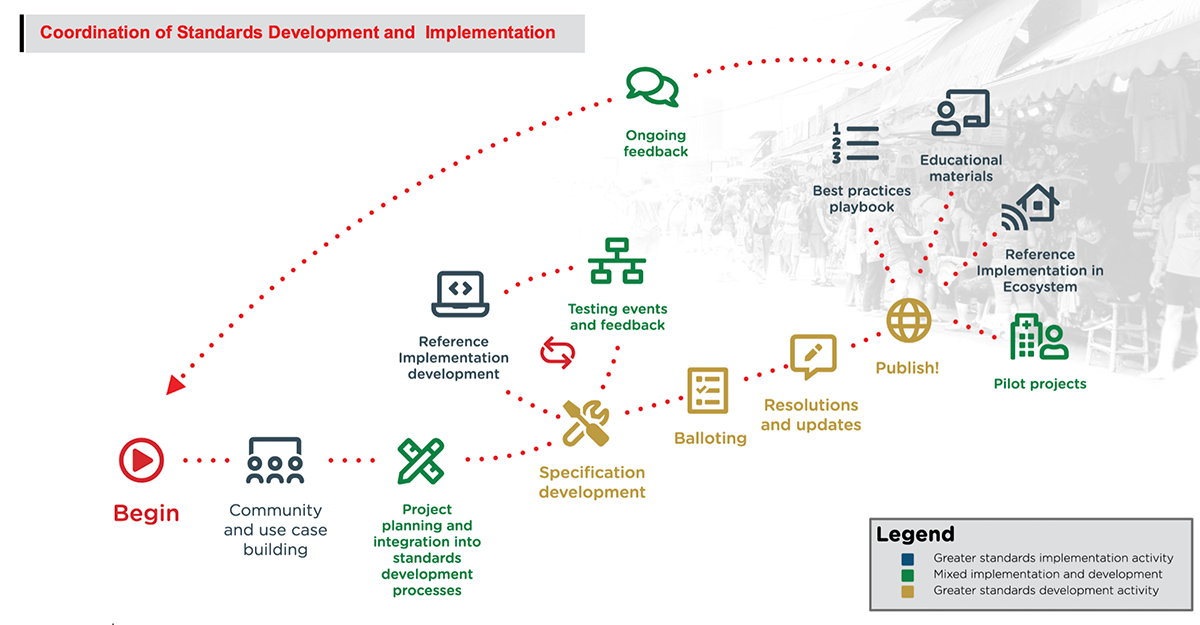
The highlight of the year was the completion (in collaboration with the Chief Standards Development Officer, Dr. Dan Vreeman) of the Three-Year Development Plan (2022-2024). The HL7 Three-Year Business Plan is a series of principles, derived strategies and detailed goals and programs in areas of interest.
The five principles are: Focus, Agility, Global Relevance, Community, and Sustainability.


This area deals with improving and expanding the HL7 FHIR Accelerator Program™.
In 2024 we matured the Accelerator Blueprint—a complete guide on creating and managing an HL7 FHIR Accelerator—and a series of webinars explaining it.

Additionally, in 2024 we launched the formation phase for the Devices accelerator.
We continue to mature the HL7 FHIR Accelerator program to standardize processes including finance and a regular coordination call for the Accelerator to enhance collaboration between them. Two accelerators are already aligned with the Accelerator Blueprint, and we hope to continue in the following years. We also launched the FHIR Community Process in collaboration with the CSDO and the FHIR Product Director.
This area is about reaching out for communities already working with FHIR as well as new communities.
DevDays 2024: This is the largest event to bring together FHIR experts and implementers from across the globe. The 2024 edition was held June 10-13 in Minneapolis, MN and included four full days of technical, community and tutorial sessions. Session presentations are available here: https://www.devdays.com/devdays-edition-2024/
FHIR Connectathon Track for the CDC: A new track for the CDC was developed as a way to introduce public health participants to the Connectathon as well as the HL7 SDO process and products.
Open-Source Tools Webinars: This series of webinars introduced the most relevant open-source products aimed to FHIR implementation.
FHIR Security Event: This two-day virtual event discussed best practices, options, state-of-the-art solutions and problems when implementing FHIR services for sharing clinical information.

In May 2024, we launched the FHIR Foundry as promised, at https://foundry.hl7.org/. It is a unique platform designed to advance the discovery, testing and implementation of HL7 FHIR specifications. The FHIR Foundry, part of HL7’s strategic plan to enhance global health interoperability, is an open ecosystem platform that offers a centralized, user-friendly environment for developers and implementers worldwide.
The FHIR Foundry is the go-to resource for finding and experimenting with reference implementations, accessible to all, including those with limited technical skills. This enhances outreach and discovery, making it easier for a wider audience to engage with FHIR standards. The Foundry also enables continuous testing beyond Connectathons and dedicated events, allowing implementers to test client applications and servers using robust sample data at any time.
Most HL7 FHIR accelerators’ reference implementations are in the Foundry Gallery, including Argonaut, CodeX, Da Vinci, Fast and Gravity. Four open-source products are located on the Foundry: Meld, HAPI FHIR, FHIR Candle and WildFHIR. Other non-accelerator RI included in Foundry are Spark, Beda EMR, FUME and the Meld Community Edition.
In 2024, we successfully launched the FHIR Foundational Implementer Exam, and began the development of the second of four new advanced credentialing exams as part of the new Credentialing Program: FHIR Advanced Developer exam.
In addition, we expanded the Certified Educator Program (14 in total; up from three last year). We also launched the Education Partnership program, creating the categories and web pages, and maintaining two corporate partners: AEGIS and fire.ly, as well as one University partner (University of Taipei).
HL7 finalized the agreement for a new regional partner for the Southeast Asia Region: AeHIN.
Diego Kaminker, our Deputy Chief Standards Implementation Officer (DCSIO) traveled the world to meet affiliates and regional partners. He visited Chile (annual Connectathon), Sao Paulo, Ecuador (new affiliate), Perú, Colombia and Argentina for local affiliates’ events, and as well as two European events—FHIR Camp (Portugal) and Care Insight (France). Additionally, Kaminker participated in a training and event in Nairobi, Kenya (GDHF) organized by our regional partner in Africa (HELINA) and in Zimam’s Digital Event in Dubai, UAE, where he finalized the creation of a new regional partner for the GCC region.
He also participated in two events in Asia: SNOMED CT Expo in South Korea, and Gateway to Health Data in Taiwan.